We Need To Talk About Lois Lane

The Underrated Brilliance Of Josie And The Pussycats

Five Years Later, And You Still Missed The Point Of Sucker Punch

Thursday, July 13, 2017


Lois Lane doesn’t get enough credit. I don’t know how else to say it—the DCEU is a $3 billion (and counting) franchise with tons of iconic characters that have already been introduced and are the subject of analysis and discussion among fans and yet the one person I don’t see getting her due is Amy Adams’ portrayal of Lois Lane.

Lois is a badass. It’s as simple as that. I will never forget watching Man of Steel in theaters and hearing her shut down Nathan Hardy’s false attempts at being concerned: “Look, let's get one thing straight, guys, okay? The only reason I'm here is because we're on Canadian soil and the appellate court overruled your injunction to keep me away. So, if we're done measuring dicks, can you have your people show me what you found?”

This is someone who is here to get the job done at any means necessary. She doesn’t care if you’re her enemy or her friend, if you’re in her line of investigation she will get what she needs so it’s best to just give it to her. She knows that she’s good and that’s what makes her a threat. This kind of confidence usually teeters on the edge of being arrogant, but we never get this impression from Lois because she works twice as hard as her colleagues. Any woman in a field as competitive and sexist as journalism can relate but the best thing about the DCEU’s interpretation of her is that her gender isn't the reason why she faces the challenges that she does.

The fact that she’s a woman does come up in conversation but years of experience have taught her how to respond in order to move forward. Lois’ introduction in Batman v Superman is just as powerful as her opening lines in Man of Steel: Lois arrives in Nairomi with Jimmy Olsen to interview the warlord Amajagh and the first thing he says to her is that he didn’t know he a lady would be interviewing him. She responds with the simple yet effective line, “I’m not a lady, I’m a journalist.”


Her gender isn’t the reason why she’s a Pulitzer Prize-winning journalist. Her intelligence is. Her determination, her refusal to abandon stories even when Perry White tells her that she should for the sake of the Daily Planet’s reputation. They both know that she won’t. She chases the best stories and doesn’t let the risk of her job’s name get in the way of finding the truth.

Meeting Clark Kent is the first time that she’s had to keep a secret. When he uses his heat vision to save her from bleeding to death, her natural instinct is to craft an investigation around the identity of this mystery hero. When Perry refuses to publish it, she goes as far as getting a gossip journalist to leak parts of the story but after learning the entire truth and hearing it from both Clark and his mother Martha, she decides to drop the piece altogether.

Even Perry was surprised when she agreed to do so—when has she ever dropped a story? As crazy as her claims were, she’s still a reliable reporter. Clark’s power would’ve been revealed regardless so publishing the story would only skyrocket her credibility but she refuses to in order to protect Clark. Her methods could be considered destructive but she still has a heart. Clark’s story spoke to her; he’s spent his entire life struggling to hide his alien identity while at the same time wondering where he came from. Knowing all of this made her care for him. It’s a bond that they share throughout the movie and that’s why their eventual romance doesn’t feel forced.


Their relationship is complex but it isn’t what motivates her actions. She isn’t guided by what Clark says but by what she needs to know in order to discover the truth. Lois is the one who finds out about Lex Luthor’s plan in Batman v Superman—without her, both Bruce Wayne and Clark wouldn’t have seen the reality. They were so focused on their own investigations to tear each other down that they weren’t looking in the right place—and that’s where Lois came in.

Her investigation in Batman v Superman is crucial because it once again shows her importance as a character. She doesn’t have superpowers but her strength lies in her detective skills. Batman may be the World’s Greatest Detective but Lois is just as good as him during the events of the film. Although she’s super in her own right, she’s still human so of course Clark has to swoop in to save her but it isn’t repetitive and it only happens in life or death situations.

Clark knows that Lois can handle herself but that doesn’t mean he’s exempt from worrying about the woman he loves. Knowing his secret and eventually finding out that Lex is behind everything puts her in a dangerous situation but she doesn’t let her lack of physical superpowers prevent her from trying to help Clark so Lex can be stopped.

Just like Clark saves Lois, Lois saves Clark. Batman and Superman’s battle ends with Batman pointing a Kryptonite spear to his face, ready to kill him. Lois, finding out where the fight is at, heads there and throws herself in between a crazed Batman and an unresponsive Superman to tell Batman that Martha is the name of Clark’s mother. She put her life on the line to protect not only Clark but also his adopted family’s name. If Lois wasn’t there, Batman would’ve killed Clark without remorse or knowledge of who he is or what he means to the few people who are left in his life that he trusts.

Lois is never reduced to being a superhero’s girlfriend. She would reject that title and that’s why she continues to be just as determined and great at her job after meeting Clark as she was before he came into her life. We know all too well how blockbusters portray women in superhero films but the DCEU has always given us women who are more than just love interests or side characters.


Even before Wonder Woman, the supporting characters alongside Lois in Man of Steel and Batman v Superman aren’t limited by their gender; they’re important characters because they signify various levels of power and add to the discussion at hand. Senator June Finch may not have had a lot of screen time, but all of her scenes left an impact because of what she had to say regarding the topic of Superman. Faora is a compelling villain, not because she was wronged or hurt by men, but because she genuinely believes that her alien race is superior.

If any of them didn’t exist, the story wouldn’t have been able to move forward. That’s why Lois is important—she evolves so much between the events of Man of Steel and Batman v Superman and without her, the outcome of both movies would be significantly different. As we prepare ourselves to watch Justice League in November, don’t forget Lois. The fact that she’s saved the day multiple times by just being herself is enough to consider her a hero.

Friday, May 19, 2017


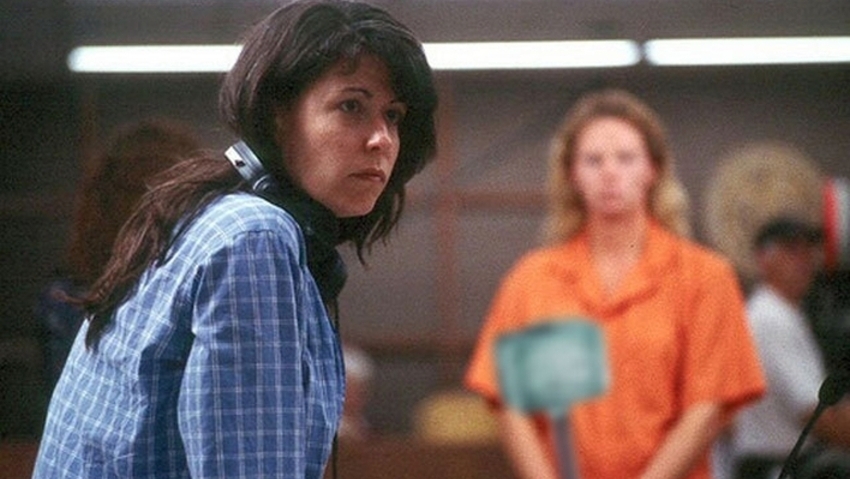
Monster is the type of film that takes you on an emotional roller coaster. I remember watching it years ago thinking that I would be left scandalized by this real life story of a serial killer but instead I found myself never feeling that way; in fact, I was surprised that I felt sympathy towards Aileen Wuornos. Not only did Charlize Theron embody Wuornos physically, but she also searched beneath the surface to give a multilayered performance of this complex person. It wasn’t until I got older that I realized that wouldn’t have been possible without the direction of Patty Jenkins.

A lot of us will get our first introduction to Jenkins’ filmography with Wonder Woman but her directional debut Monster (which was also her only feature length film before Wonder Woman) is a haunting portrait of an irreversibly damaged woman. The fact that this was her first film speaks volumes to the dedication that she had to telling this story truthfully.

Although Wuornos was a serial killer, she was also a victim of her abusive environment. The film doesn’t start with her pointing a gun at someone, it starts with her contemplating pointing the gun to herself. She decides to spend her last money on a drink before killing herself and that’s where she meets Selby (based on Tyria Moore), her eventual love interest and the reason why she doesn’t commit suicide. There’s an interesting parallel between these two characters; they couldn’t be more different but their loneliness is what gravitates them towards each other.

Aileen has been constantly abused and treated as a subhuman because she’s a prostitute, while Selby is closeted and unable to be herself in a racist and homophobic household. Selby doesn’t seek a relationship at first, she just wants someone to talk to and Aileen has a lot to say but no one listens. The two jump headfirst into a relationship and while reckless, their need for affection is what drove them together.


Theron received rightful praise and accolades for her portrayal as Wuornos but Christina Ricci’s performance as her sheltered but observant girlfriend is just as great. At first glance, one would dismiss Selby as naïve or childish for running off with a woman she hardly knows but she wasn’t getting everywhere living with people who were too closed-minded to understand her. She is naïve but in Alieen, she sees a way to escape and be herself. Before they leave, Aileen tells her that this is a once in a lifetime opportunity—she can’t know unless she tries. Selby hesitates at the thought of doing something as drastic as this but accepts, unaware that Aileen is running away because she’s killed someone.

The most unsettling thing about the film is that there’s a build up to the murders, there’s a reason why Aileen decided to kill. Just watching the first act of the film, you would think that the story is an unlikely romance between two women but Aileen has had pent up anger for years. According to her real life testimony, the first man she killed sexually assaulted her so Jenkins translated that to the film. It’s a stark difference from a few scenes earlier where Aileen and Selby are still in the honeymoon stages of their relationship.

Aileen tries to shelter Selby from real world problems by running off with her to live at a hotel and spending stolen money on dinners and alcohol. It’s nice at first, but Selby has always been a realist. Aileen vows to never prostitute again after killing her first victim and Selby asks her what will she do to support them. “I’ll be a veterinarian…be president!” Selby goes along with her but not before telling Aileen that she would need a degree to be a veterinarian. Selby often serves as a reminder of the reality that Aileen is in. Despite endless job hunting, Aileen is still mistreated and her anger towards the world and towards men only continues to intensify. She realizes that she can’t be a veterinarian, she can’t be president. The only way she can make money is to prostitute herself and that’s what leads to her kill again.


When Aileen finally reveals to Selby that she killed someone, she expects Selby to leave because everyone in her life has always abandoned her. Instead, Selby wraps her arms around her and allows Aileen to cry into her lap. Despite committing this terrible crime, Selby is still there for her. She understands that at this point, she’s in over her head but how can she leave someone who’s been just as lonely as her? Even when Selby tries to break away from Aileen's overbearing protection—much like she did with her own family—she always ends up back with Aileen because unlike her family, they both give each other the support that they need.

Aileen may have killed in self-defense at first, but she eventually kills out of rage. She starts to project her anger onto innocent people and that’s what leads to her demise. She even goes to the point of provoking men to hurt her so she has a reason to kill them. The film is able to acknowledge that although she was a victim, she still made the decision to murder people. Death was always on her mind—instead of killing herself, she decided to kill others. Why did she have to suffer for the pain that the world has caused her? Why can’t she hurt men in the same way that they hurt her?

These internal questions are clear while watching the film and it was Jenkins’ intention. It wasn’t until I saw the film again and started reading interviews that I found out that Jenkins actually corresponded with Wuornos through letters. No wonder she was able to understand her so well; she had something better than books and documentaries—she had Wuornos herself who was open to telling her what was going through her mind.  

Although not innocent, Aileen still cared deeply for Selby—the one person she’s ever loved. Even when Selby has to work with the police in order to incriminate Aileen, she confesses to committing the murders alone to protect Selby. There’s a tragedy in their relationship ending this way, but Aileen always knew this was coming. Monster may be a film about a serial killer, but that isn’t the focus. Aileen and Selby’s relationship was prioritized above the rest and that’s why we’re left with such a strong emotional reaction during the film. We don’t expect to feel anything towards a murderer but Jenkins was able to craft a story where we do feel sympathy and we don’t feel bad for doing so.

Monster was originally supposed to be a high-sensation, straight-to-video kind of film but after communicating with Wuornos, Jenkins realized that she couldn’t tell her story like that. Approaching Wuornos as a human being and not a cheap form of entertainment is what makes Monster such a profound film. Jenkins, who also wrote the script, was able to create a haunting story led by incredible performances and looking back on the film today, it feels very underrated. For all the praise that it received, I can’t help but wonder why a filmmaker as passionate as Jenkins hadn’t made another feature film until now.

Of course, the answer is obvious. This is Hollywood, an industry dominated by men. But seeing Patty Jenkins back fourteen years later with Wonder Woman is exciting. This is an artist that’s already proven herself to understand complex characters because she’s an actor’s director. I saw that with Monster and I see it now with Wonder Woman. It’s still surreal knowing that we’re actually getting a Wonder Woman film in two weeks but do yourself a favor and watch Monster first. While difficult to watch, it’s a masterpiece of character breakdown and needs to forever be acknowledged for that. 

Friday, April 14, 2017


Josie and the Pussycats reached the sixteenth anniversary of its theatrical release this past Sunday and I’m 100% serious when I say that this film is not only wildly underrated but also masterful in its commentary about consumer culture and girl power. There’s so much to be said about Josie and the Pussycats in terms of feminism that I’m unsurprised but nonetheless disappointed that it isn’t talked about more.

At first glance, one would probably dismiss this film as plotless and silly. Roger Ebert himself gave the movie a scathing half-star rating, claiming that central characters Josie, Valerie and Melody are just as dumb as the Spice Girls (neither are, by the way), that the commercial commentary was overdone and that the soundtrack was awful. I never thought I would say this, but you were wrong Roger! Especially for the latter—the soundtrack is iconic.

There’s an ongoing silliness about the movie that’s completely intentional. The message about consumer culture may feel exaggerated to older people but this is something that’s still seen even today. The beginning of the film starts with screaming fans waiting for Du Jour (a rip-off of the Backstreet Boys/NSYNC) to show up before they board their private plane. There are girls, there are guys, everyone is in love with this band. One girl exclaims that she just wants to touch them, she doesn’t care who it is or where she touches them.

This obsessive fandom mentality has been seen with seen with recent boy groups from One Direction to every K-pop group that reaches an international audience. Before, MTV was the primary source to get information and watch music videos but today, we have YouTube. Nothing has really changed except for the outlet that people use to get closer to their favorite bands and groups.

When Du Jour finally boards their plane, the first thing we notice is the overwhelming product placement. The plane is Target themed with household brands such as Bounce and Ivory taped to the overhead. One of the band members complains that his limited addition Coke can features an older appearance that isn’t up to date with his current appearance and you instantly get the feeling that these people are very shallow.


The group members are so focused on their looks in magazines and soda cans that they constantly argue. They’re still friends, but fame and media has dumbed them down. Despite this, they’re still smart enough to realize that MegaRecords, their record label, may be using their music for sinister intentions. This curiosity is what leads to their disappearance and the eventual rise of Josie and the Pussycats.

Du Jour’s actions towards each other is a huge contrast to Josie, Valerie and Melody. These three girls love each other; they’re tight-knit, consider themselves sisters and despite constant setbacks with trying to get a record deal, they know in the end that they have each other. And that’s what always matters: the fact that their friendship and love is the number one priority. They're not manufactured in the slightest—they just want to make music because they enjoy it.

Each girl is their own individual character and that’s what makes them work so well: Josie is the insecure singer who knows she and her friends are good enough to make it big but can’t help but to question why it hasn’t happened; Valerie could be seen as the parent of the group because she’s level-headed and constantly reassures her friends during their moments of doubt, and Melody is a vegetarian animal lover who just wants to spread peace and positivity among everyone. Although Melody portrays the trope of a ditzy blonde, she turns the trope upside down with her in-depth analyzation skills. We relate to and like the girls because they’re genuine and diverse in appearance, which is the first thing that’s threatened when they get signed to MegaRecords.

The flashy product placement in the film is shown to emphasize how often companies insert their brands into society for people to subconsciously take in. Starbucks, McDonalds, Pizza Hut, Steve Madden, Puma—these are all brands that people are actively using and it ties into the bigger conspiracy of how MegaRecords uses music to brainwash their consumers into using products that they deem cool, therefore making society a slave to the brand.


MegaRecords doesn’t care about its clients, they only care about making money—after Du Jour goes missing, it's announced that the label is releasing a limited edition boxset of their discography. They don’t care enough to release a statement about their disappearance, their focus is how much more money can they make off of Du Jour’s name before they’re completely irrelevant.

The consumers aren’t listening to Du Jour, they’re listening to subliminal messages—which are ironically enough spoken by iconic voice Mr. MovieFone—telling them to buy new things. One minute red is in, the next pink is the new red… it’s never-ending. There’s a scene where MegaRecords executive Wyatt goes to a CD store and plays the last recorded song from Du Jour and everyone changes taste again. The only person who doesn’t fall for the message is a goth girl who Wyatt calls a free thinker. The company ends up kidnapping her for brainwashing purposes, thus showing that freedom of expression is a threat to those in power (sound familiar?).

Josie, Valerie and Melody pose that same threat towards the company but they’re so excited about fame that they don’t realize at first. It isn’t until the girls get an instant makeover (to match current trends) and walk outside to see their poster on a billboard that the reality sinks in. Valerie thinks it’s strange that the band is being marketed as Josie and the Pussycats instead of their original name The Pussycats. Josie was already predetermined as the face of the group and Valerie instantly notices that. This awareness is similar to Du Jour’s and because Valerie caught it so quick, she’s at risk.

The mastermind behind this brainwashing mega company is the outgoing Fiona. She displays the typical characteristics of an eccentric villain; she’s flashy, confident and shallow—just like the ads that are hidden in her client’s songs. Although she appears confident in her plan, there’s a hidden insecurity that’s later revealed when the girls go to a MegaRecords party (that’s being promoted with Josie’s face) and she invites them to her room for girl time.

That “girl time” is mostly Fiona fawning over Josie and belittling herself for wanting to eat one Pringle potato chip. She asks Josie personal questions such as how much does she weigh and is only happy when Josie says she weighs 118 and Fiona reveals that she’s three pounds lighter. Despite this, she refers to Josie as “pretty and popular” and the girls are rightfully freaked out. After the incident, Melody echoes Valerie’s previous concerns and Fiona and Wyatt decide that they both need to be taken out.

Josie isn’t oblivious to this either, she’s just as alarmed as her friends but she’s also trying to adjust to her newfound fame and potential love life. Despite the romance subplot between Josie and almost-boyfriend Alan M, it’s never the central issue. The relationship between the girls is always emphasized and that’s why it’s painful when Josie gets brainwashed into believing that she’s the face of the band, something that she actively rejected and was afraid would happen. She’s become the very person she promised herself she wouldn’t and she doesn’t even know it’s happened.


There’s an earlier scene where the girls are on a plane to the recording studio and they’re sitting together in excitement over their sudden luck. They make a promise to themselves to put friendship first and the band second but Fiona’s greedy obsession with popularity led to their conflict. Valerie didn’t want to believe that Josie only had fame in mind but she starts to resent her because she’s become the face of the band and is the only person marketed through magazines and interviews and—surprise—Coke cans. In a way, even she’s brainwashed to think that Josie is the star because that’s how the media promoted the band.

Josie snaps out of the manipulation after falling down and seeing pictures of her, Valerie and Melody. Being able to look past the toxic subliminal message in their songs and see photos of her and her friends together proves that love trumps hate. Valerie and Melody are more important than being famous because friends come before the band, boys and everything else.

Fiona’s ultimate plan is to achieve something she’s never had before: popularity. By using Josie’s stadium performance, she planned to market out the message that she’s coolest person ever. The girls are surprised by this revelation; to have that much power and send out a message as trivial as that is strange to them but to Fiona, it means the world. This is the tragedy of Fiona’s character—she was unpopular in school and teased because of her lisp. Even as a powerful CEO, she isn’t happy. She changed her voice and fit into trends so she could be admired but that’s still not enough.

The biggest twist in the film (other than Du Jour surviving the plane crash and only being alive because they knew the lyrics to Metallica’s Enter Sandman) is that Wyatt and Fiona went to school together and were both unpopular. Wyatt was teased because of his albino appearance so he started wearing makeup to hide his real skin. Both are wildly successful but still feel like they have to hide who they are. Wyatt wipes away his makeup and takes off his wig, prompting Fiona to remove her false teeth and their embrace ends with him showing off his beer belly. They’re finally comfortable in their own skin… only realizing too late because they get arrested by the very government that they extensively worked with.

In the end, the girls are able to play their music to the people and not subliminal messages. Embracing yourself and not what society tells you to is the main theme of the movie, and it’s what the girls did even when questioned or threatened. Josie, Valerie and Melody are all special because they’re genuine and that’s why concert-goers ended up liking their real music. Josie said it best: “It’s cool if you like it [our music]. It’s all right if you don’t. Just decide for yourselves.”

The media is a powerful machine that only continues to be influential. Although the film jokingly shows how popular people and names such as MTV, Carson Daly, Starbucks, Target and more were involved in the brainwashing conspiracy, it’s still a message that’s relevant today. Obviously not with brainwashing, but it is easy to be influenced by what the media says and sometimes you find yourself forming an opinion based on what someone else says because you never got the chance to experience it and decide for yourself. Hell, when Fiona and Wyatt get arrested, they’re told that the government would start sending messages through movies because it’s easier to reach audiences. But as long as free thinkers exist, everyone won’t be controlled by the media. 


Like I said, Josie and the Pussycats has a brilliant message behind it. As culturally dated as the movie is, it’s still a film that was ahead of its time. This movie promoted girl power, feminism and individuality in a time where no one talked about it. Sixteen years later and we finally are but we’ve forgotten one of the hidden gems of the early 2000s that helped us get here.

Growing up, I loved this movie because it was about friendship between girls. Now, I love the movie for that same reason but also the social commentary and the message it emphasized about being an individual. I’m still trying to understand how Roger Ebert missed that but regardless of what any critic says, this is a movie that was made for girls and by girls (Deborah Kaplan co-wrote and directed the film) and in a world that still needs female-driven content, we need to embrace positive representation of women and friendship when we see it.

About Me

My photo
enjoys foreign films, worships batman, k-pop enthusiast
Powered by Blogger.